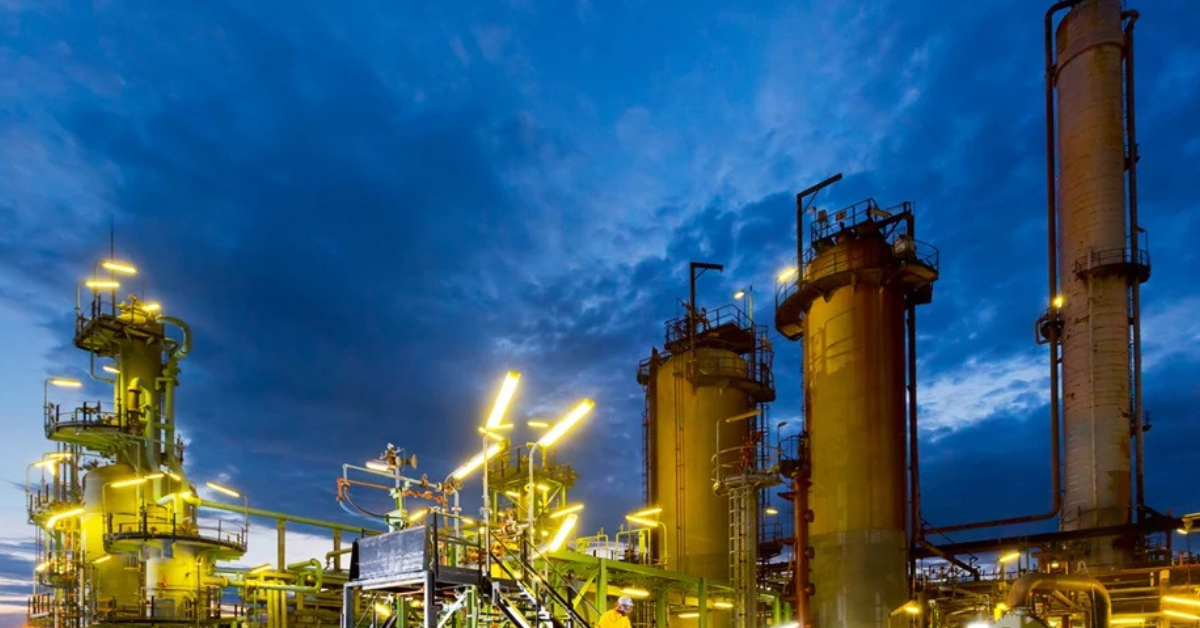
Africa’s largest economy, South Africa, is strengthening its energy sector as the 108,000 barrels-per-day Natref refinery returns to full production after months of repairs. The inland refinery, operated by Sasol, suffered severe damage in a fire in early 2025, disrupting nearly a third of the country’s refining capacity.
Now, the restart is lifting national fuel output and easing pressure on supply chains. Petrol, diesel, and jet fuel volumes are rising steadily, while dependence on imports is falling. As a result, market confidence in South Africa’s inland fuel security is improving.
Before the fire, Natref processed about 108,000 barrels per day, representing close to 30% of South Africa’s refining capacity. When the plant went offline, the country relied heavily on imported fuel. That disruption also raised concerns about aviation fuel availability at OR Tambo International Airport, the country’s busiest travel hub.
Following the successful restoration, Sasol has revised its 2026 fuel sales guidance upward. The company expects stronger volumes as refining operations stabilize. In addition, improved output at its Secunda complex has reinforced overall production performance, supporting supply across key domestic markets.
Although operational recovery has gained momentum, financial challenges persist. Sasol recently reported a sharp year-on-year decline in net income, largely driven by weaker global oil prices and impairment charges. However, disciplined cost control and higher plant reliability have helped the company generate positive free cash flow. Consequently, capital spending has eased, providing breathing room amid volatile market conditions.
Chief Executive Officer Simon Baloyi emphasized that completing the Natref repairs marked a strategic priority for the business. He noted that operational efficiency, cost discipline, and active hedging remain central to protecting margins in a fluctuating energy environment. At the same time, Sasol continues to advance renewable energy initiatives to strengthen long-term resilience.
The full return of Natref signals more than a technical recovery. It restores a critical refining asset that anchors inland fuel distribution. Furthermore, it positions South Africa to navigate supply risks with greater stability. While profitability remains under pressure, restored capacity and strategic planning now give Sasol stronger footing heading into 2026.
For Africa’s largest economy, the refinery’s revival represents a decisive step toward energy security, improved fuel production, and renewed confidence in the country’s industrial backbone.