
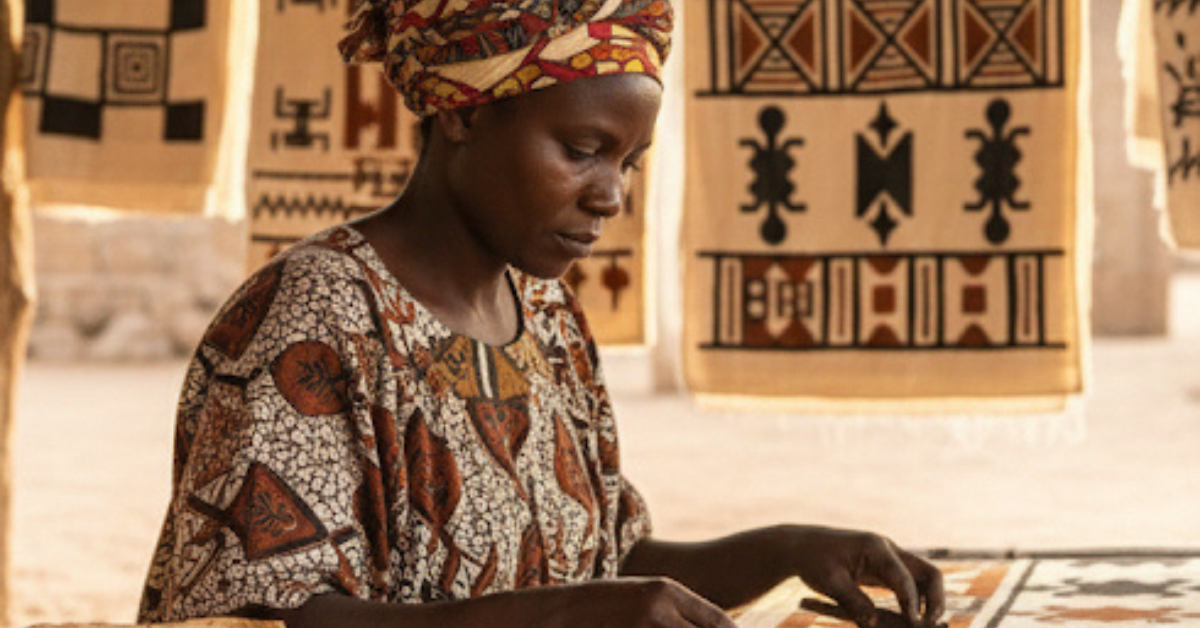
Bogolanfini, commonly known as Bogolan or African Mud Cloth, stands as one of Mali’s most treasured cultural creations and one of Africa’s most globally recognised traditional textiles. Handmade from locally woven cotton and dyed using fermented river mud, the fabric carries centuries of history, symbolism, and spiritual meaning rooted deeply in Malian tradition.
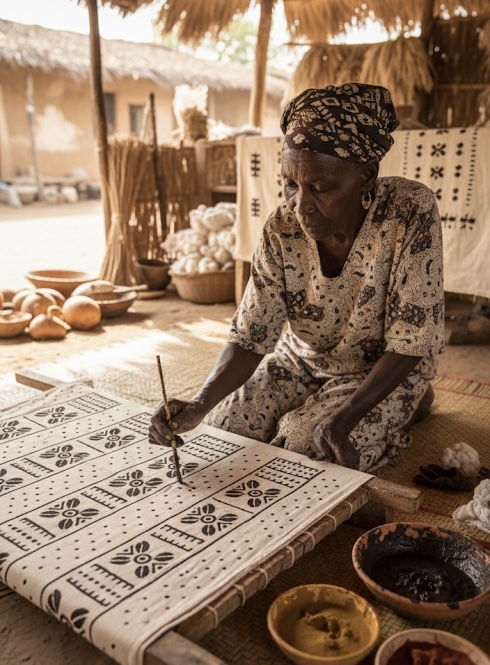
For generations, Bogolanfini has played a vital role in Malian cultural life. Long before its rise on international fashion runways and interior design spaces, the cloth was woven, dyed, and worn within communities as a marker of identity, protection, and transition. Today, it has evolved into a powerful symbol of Malian cultural pride and African heritage, exported worldwide for use in fashion, fine art, and home décor.
Among ancestral communities, Bogolanfini was often referred to as “medicine cloth,” a name that reflects its spiritual significance. Traditionally worn during important life stages and ceremonies, the textile was believed to offer grounding, protection, and a deep connection to the earth. Its natural dyes and organic process tied the wearer closely to nature, reinforcing harmony between humanity and the environment.
The word Bogolanfini comes from the Bamana language and translates to “earth with cloth.” The textile originated in Mali around the 12th century and was developed by skilled artisans from Mandé-speaking communities across West Africa, including the Bamana, Malinké, Dogon, Sénoufo, and Bobo-Oulé peoples. Despite the passage of time, Bogolanfini remains one of Africa’s most enduring and time-honoured textiles, preserved through generations of village craftsmanship.

Every Bogolanfini cloth tells a story through its symbols. Geometric patterns are intentionally applied, each carrying meaning understood within the community. Circles with a central dot often represent family units or communal bonds, while zigzag motifs symbolise life’s journey, resilience, or spiritual protection. These designs are not merely decorative but function as visual language, particularly during rites of passage and communal ceremonies.
As Bogolanfini’s influence spread beyond Africa’s borders, its distinctive patterns began appearing in global markets. However, widespread imitation and mass production have raised concerns about cultural appropriation and the lack of recognition or fair compensation for the original artisans. Despite these imitations, authentic Bogolanfini remains unmatched. No machine can replicate the depth of meaning, ancestral wisdom, and cultural spirit infused into cloth shaped by human hands and natural elements.
Whether worn as clothing or displayed as décor, Bogolanfini continues to embody harmony with nature, community, and history. It holds stories of the land, the people, and the traditions that shaped it. Created with intention, patience, and respect for the earth, the fabric represents more than craftsmanship, it reflects healing, heritage, and identity.
In a world increasingly drawn to fast fashion and mass production, Bogolanfini stands as a reminder of the power of slow, intentional creation. It remains, at its core, a textile shaped not only by mud and cotton, but by culture, memory, and soul.


