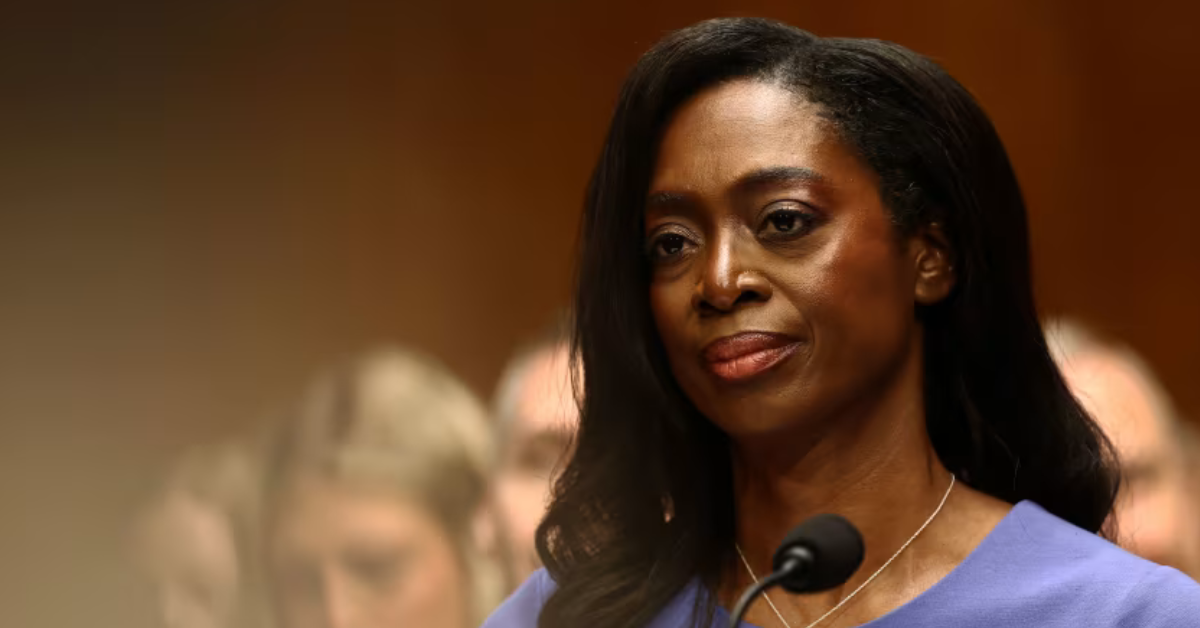
The White House has moved a step closer to reshaping the leadership of America’s public health institutions after two senior nominees at the US Department of Health and Human Services advanced through a crucial Senate committee vote.
The Senate Health, Education, Labor and Pensions Committee voted on Thursday to advance the nominations of Dr. Erica Schwartz to lead the Centers for Disease Control and Prevention and Sean Kaufman to head the Administration for Strategic Preparedness and Response. Their nominations now await consideration by the full Senate.
The committee vote followed days of discussions between lawmakers and senior Health and Human Services officials over vaccine misinformation, particularly statements relating to autism and immunization that had appeared on the CDC website.
Senator Bill Cassidy, chairman of the committee, announced his support for both nominees after holding multiple conversations with federal health officials.
He said the administration had committed to correcting misleading vaccine information and strengthening confidence in public health communication.
Cassidy emphasized that scientific evidence continues to show no link between vaccines and autism.
“While there have been changes to the CDC website, any assertion that there is a link between autism and vaccines is wrong. We don’t know what causes autism, but study after study shows that it is not vaccines,” Cassidy said.
He added that the administration has pledged to continue removing vaccine misinformation from official government platforms and said he would closely monitor progress as additional Health and Human Services nominees move through the confirmation process.
The committee chairman had previously questioned whether Dr. Schwartz would have sufficient independence to lead the CDC after the departure of the agency’s previous director.
He also raised concerns over Sean Kaufman’s past public comments challenging the safety and effectiveness of certain vaccines, including mRNA vaccines.
According to Cassidy, Kaufman acknowledged that some of his previous remarks were inappropriate and assured lawmakers that he would not oversee vaccine policy or serve as the final decision maker on issues involving mRNA vaccines if confirmed.
“You sometimes don’t get the nominee that you’d like to have, but you get a nominee that you have to have,” Cassidy said while explaining his support for Kaufman’s nomination.
Dr. Schwartz received bipartisan backing, with all Republican members of the committee joined by Democratic Senator Tim Kaine in voting to advance her nomination.
Kaufman’s nomination, however, passed largely along party lines, highlighting continuing political divisions over public health policy.
Despite clearing the committee stage, neither nominee is expected to receive a confirmation vote before the Senate begins its August recess. As a result, final confirmation is likely to be delayed until lawmakers return in September.
The nominations come at a critical time for the United States as policymakers seek to rebuild public trust in health institutions while balancing scientific integrity, political oversight, and preparedness for future public health emergencies.
The Senate’s final decision will shape the leadership of two agencies central to the country’s disease prevention and emergency response strategy.