Uganda and Tanzania are deepening their energy partnership with a new agreement designed to expand petroleum infrastructure, strengthen regional trade and attract billions of dollars in investment across East Africa.
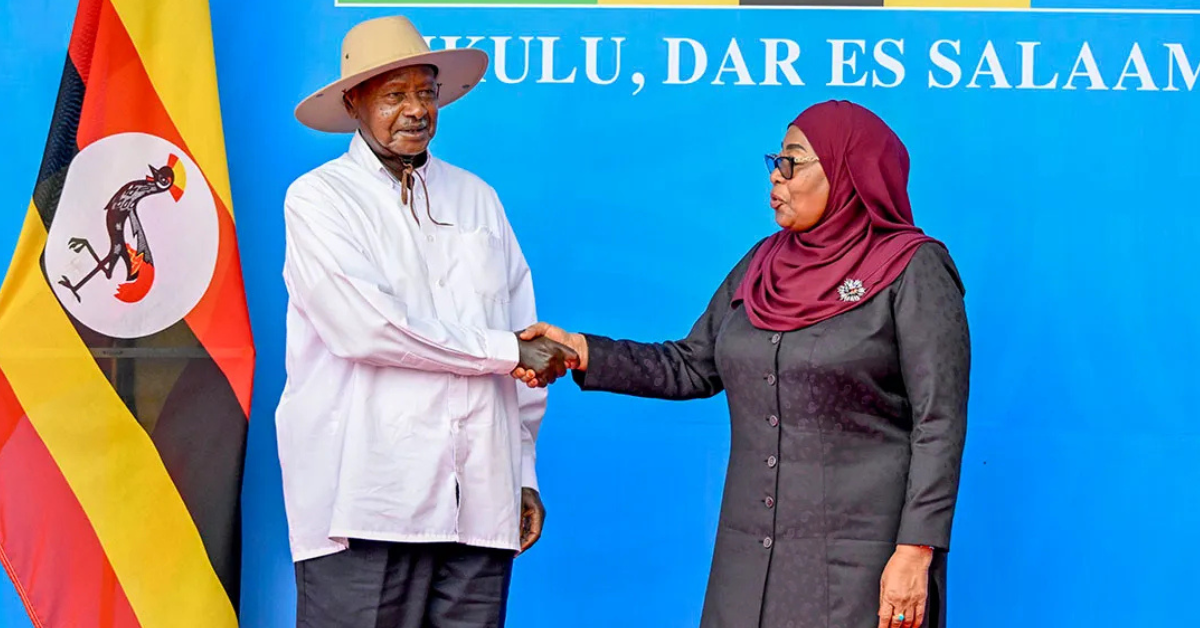
Ugandan President Yoweri Kaguta Museveni and Tanzanian President Samia Suluhu Hassan witnessed the signing of a Memorandum of Understanding between the Uganda National Oil Company, the Tanzania Petroleum Development Corporation and Vitol Bahrain E.C. to jointly develop the Tanga Regional Energy Hub.
The agreement marks a significant expansion of cooperation that began with the East African Crude Oil Pipeline, positioning energy infrastructure as a broader platform for industrialisation, logistics, trade and economic integration.
The proposed Tanga Regional Energy Hub is expected to develop into a major regional centre for petroleum storage, refining, logistics, trading and distribution. Its development will also complement Uganda’s planned 60,000 barrel per day Hoima refinery and other oil and gas investments.
For investors, the significance extends beyond petroleum infrastructure. The partnership creates an opportunity to build a more integrated East African energy market while supporting industrial activity, employment and cross border commerce.
Uganda’s Minister of Energy and Mineral Development, Dr. Monica Musenero, said the agreement demonstrates the practical value of regional cooperation and reflects the shared ambition of the two governments to deepen economic integration.
She said the projects should be viewed as strategic industrial investments rather than simply infrastructure developments.
“These are not merely infrastructure projects. They are strategic investments that will create jobs for our young people, deepen regional trade and strengthen the logistics systems that support our economies,” Musenero said.
A major focus of Uganda’s strategy is to capture more value from its petroleum resources locally. Rather than relying primarily on crude exports, the government wants to develop downstream industries that can generate skilled employment and strengthen the country’s industrial base.
That includes opportunities in engineering, operations, maintenance, laboratory analysis and management, alongside wider manufacturing and services activity.
The partnership is also advancing several infrastructure projects beyond petroleum.
Feasibility and front end engineering design studies for a proposed refined petroleum products pipeline and storage terminal are progressing, with completion expected later in 2026. Studies for a proposed natural gas pipeline connecting Uganda and Tanzania are also expected to conclude by October 2026.
Electricity cooperation is another important component of the emerging energy corridor. Uganda has secured US$250 million in financing for its section of a planned 400kV electricity interconnector following negotiations with the World Bank.
The transmission project is expected to increase electricity exchange between Uganda and Tanzania while strengthening the Eastern Africa Power Pool. It could also create opportunities for wider electricity trading with markets further south.
Tanzania’s Minister of Energy, Deo Ndejembi, described the new agreement as the beginning of another phase in the countries’ growing energy relationship.
The East African Crude Oil Pipeline provided the foundation for cooperation between the two countries. The Tanga Regional Energy Hub is now designed to build additional economic value around that infrastructure through storage, refining, logistics, trading and industrialisation.
Ndejembi said the proposed hub could attract more than US$20 billion in investment, potentially making it one of the largest integrated energy infrastructure developments in Sub Saharan Africa.
The scale of the opportunity highlights why the project matters to businesses and investors beyond Uganda and Tanzania. A larger petroleum ecosystem could stimulate demand for logistics providers, engineering companies, financial services, technology firms, industrial suppliers and other supporting businesses.
The two governments also sought to address concerns about the relationship between the Tanga hub and Uganda’s Hoima refinery.
Rather than positioning the projects as competitors, officials described them as complementary assets within a broader regional energy system.
A proposed bidirectional multi product pipeline would allow refined petroleum products to move between Uganda and Tanzania according to market demand. That flexibility could improve regional supply security while creating additional export opportunities for Uganda.
The broader ambition is to move East Africa closer to an integrated energy market where infrastructure connects producers, refiners, storage facilities, distributors and consumers across national borders.
For Uganda, Tanzania and potential private sector partners, the next challenge will be execution. Large infrastructure projects require substantial capital, strong regulatory coordination, reliable financing and sustained political commitment.
The successful delivery of EACOP has provided both countries with experience in managing complex cross border energy infrastructure. The new agreement now seeks to extend that cooperation into a wider industrial and commercial ecosystem.
If implemented as planned, the Tanga Regional Energy Hub could become more than a petroleum facility. It could serve as a strategic gateway for energy trade, industrial investment and regional logistics, reinforcing East Africa’s position in Africa’s evolving energy economy.
The partnership between Kampala and Dodoma therefore signals a broader shift in how the region is approaching natural resources. The focus is increasingly moving from extracting commodities to building infrastructure and industries capable of retaining more economic value within Africa.
For African investors and entrepreneurs, that shift could create a new generation of opportunities across energy, logistics, manufacturing, technology and financial services


- Nigerian Afrobeats star Ayra Starr is set to make history at the NFL’s game

- Burna Boy, Shakira’s “Dai Dai” Hits 1 Billion YouTube Views

- Davido Thrills London Fans, Announces 2027 Stadium Tour

- Angélique Kidjo Makes History on Hollywood Walk of Fame

- Ghana Movie Awards 2026 Red Carpet Sets New African Fashion Standard