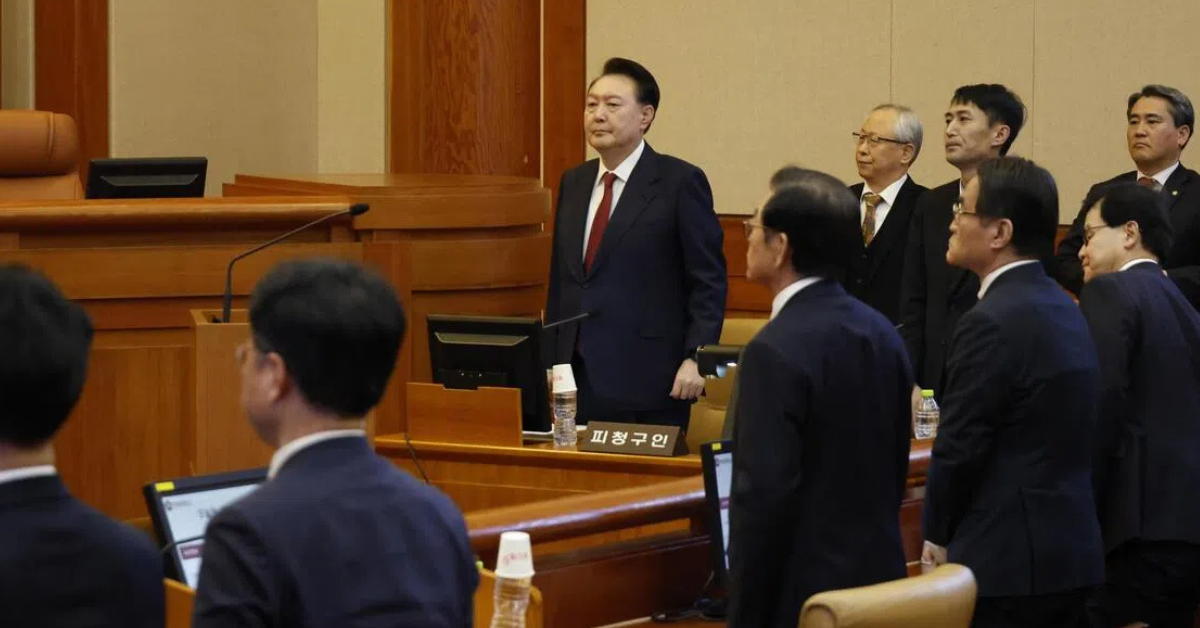
South Korea’s jailed former president, Yoon Suk Yeol, and his wife, Kim Keon Hee, received approximately 2.19 billion won, equivalent to $2 million, in deposits to their inmate accounts during their detention, according to figures released by the country’s Justice Ministry.
The figures, disclosed on October 11, 2026, by Lee Sung-yoon, a lawmaker from the ruling Democratic Party of Korea, show that the couple received more money than any other inmates at their respective detention centres.
The combined amount is approximately eight times South Korea’s annual presidential salary, highlighting the scale of financial support the couple received while in custody. Yoon Receives Nearly $2 Million in Deposits
Yoon received approximately 1.95 billion won through 45,770 deposits between July 10 and September 9, 2026.His wife, Kim, received 240 million won through 10,415 deposits from her arrest on August 12, 2025, to September 9, 2026.
The figures point to a substantial flow of financial support from outside the detention facilities, with thousands of individual transactions recorded across the period.How South Korea’s Prison Account System Works
South Korean law allows inmates to receive money from people outside prison to purchase daily necessities.However, the system places a limit of 4 million won on the amount an inmate can hold in their detention account at any given time. Authorities retain excess funds until the inmate’s release or transfer them to a personal bank account.
According to the released figures, Yoon withdrew nearly 1.94 billion won through 586 transactions.The Democratic Party said Yoon repeatedly had correctional officers transfer money from his inmate account to his personal bank account. According to the party, this practice freed up space for additional deposits.
The allegations have drawn attention to how inmates can manage substantial sums under a system designed to support their basic needs while in detention.Political Supporters Suspected of Funding the Deposits
Lawmakers from the Democratic Party believe Yoon’s lawyers and YouTube personalities who support the former president shared his inmate account details and encouraged supporters to send money.
The reported figures have raised questions about the scale of financial contributions made to high profile detainees and the role of political supporters in sustaining those contributions.
However, the claims about the distribution of Yoon’s account details and the encouragement of deposits reflect the ruling party lawmakers’ position. The available information does not independently establish the extent of each person’s involvement.What the Figures Reveal
The reported deposits offer a glimpse into the financial networks that can develop around prominent political figures, even after they leave office and enter detention.
For South Korea, the case also brings attention to the administration of inmate accounts, the management of funds above permitted balances, and the oversight of transactions involving politically influential detainees.
The figures do not, on their own, establish wrongdoing by the couple or by those who sent money. Nevertheless, the scale of the deposits makes the case notable, particularly given the restrictions governing funds held by inmates.
As further details emerge, the handling of the money and the political debate surrounding the transactions could remain subjects of public scrutiny.

- Lebo & Tebo Ndala Bring ‘Twice As Nice – With Love From The Twins’ to The Home Channel

- Luxury Tanzania Safari Camp Redefines Wellness Travel in Serengeti’s Grumeti Reserve

- Hoedspruit Emerges as South Africa’s Fastest-Growing Semigration

- British Airways Cabin Crew Salary 2026 Revealed: How Much BA Flight Attendants Earn

- Most Expensive African Cities to Rent in 2026: Rabat Ranks Among Costliest Housing Markets