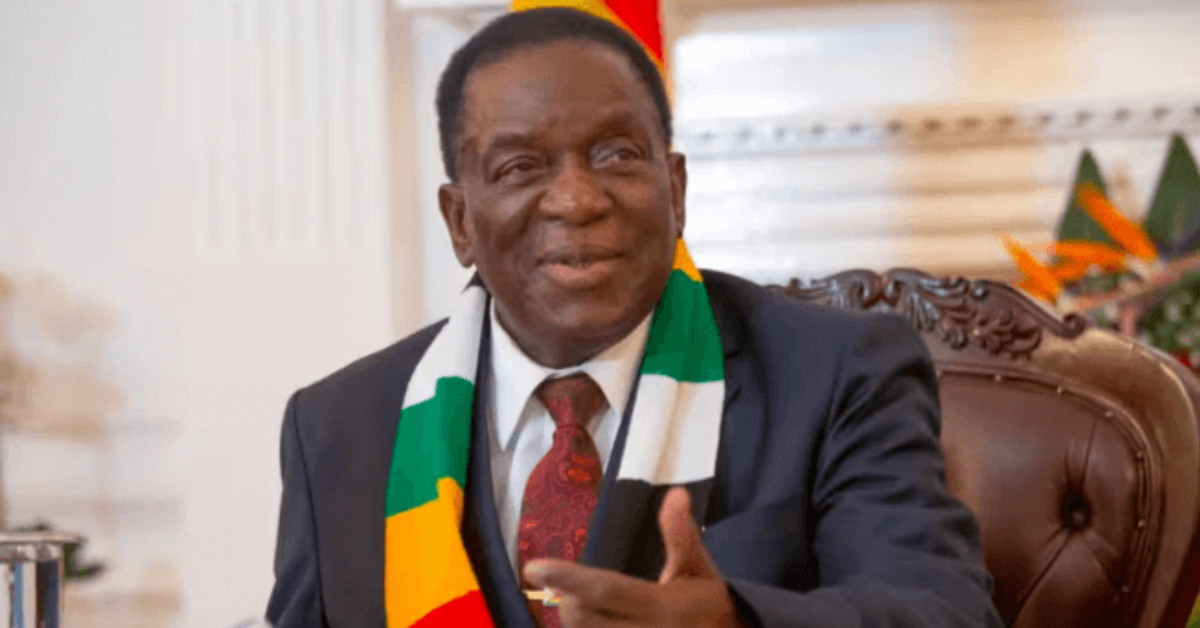
Zimbabwe is targeting a significant expansion in bilateral trade with Belarus as President Emmerson Mnangagwa seeks to deepen economic cooperation, industrial development and business ties between the two countries.
In an interview with Belarus Second National Television Channel, ONT TV, the president outlined Zimbabwe’s ambition to increase bilateral trade to $100 million by 2030, while emphasizing that stronger commercial ties should be driven by business opportunity rather than government pressure.
“Our plan is the whole $100 million by 2030,” he said, pointing to the potential for broader trade and economic cooperation between Harare and Minsk.
President Emmerson Mnangagwa said the next phase of the relationship would focus on creating an environment where businesses from both countries can identify opportunities and trade more freely.
He stressed that governments should facilitate commerce rather than dictate where private businesses should trade.
“The traders, the business people, go where they get the best advantage in both sides,” he said.For Zimbabwe, that approach could open further opportunities across agriculture, machinery, manufacturing and industrial development.
The president also linked the relationship with Belarus to Zimbabwe’s broader industrialization ambitions, particularly as African economies seek to build productive capacity and reduce dependence on imported finished goods.
One of the most visible examples of the relationship is Belarusian agricultural machinery. The president said Belarusian tractors and equipment have become widely recognized across Zimbabwe, including on his own farm.
He attributed their popularity partly to what he described as favourable purchasing terms, making the machinery accessible to Zimbabwean farmers and businesses.
According to the president, Belarus has become familiar to Zimbabweans beyond government and diplomatic circles because its machinery can be found across provinces, farms and rural communities.
Zimbabwe continues to use machinery from several international suppliers, but President Emmerson Mnangagwa described Belarusian equipment as particularly prominent.The development highlights how bilateral relationships can extend beyond political agreements and translate into practical commercial connections at the grassroots level.
The growing Zimbabwe Belarus relationship comes as African countries increasingly seek partnerships that can support industrialization, agricultural productivity and technology transfer.
For Zimbabwe, stronger cooperation with Belarus could provide access to machinery, technical expertise and commercial opportunities that support domestic production.
He emphasized that developing countries should help one another through their respective industrialization journeys.
That perspective reflects a wider shift in Africa’s economic agenda, with governments placing greater emphasis on productive investment, manufacturing capacity and value creation.
For investors and African business leaders, the Zimbabwe Belarus relationship offers another example of how international partnerships are being repositioned around industrial development and trade.
President Emmerson Mnangagwa also spoke warmly about Zimbabwe’s relationship with Belarus, describing the two countries as being “almost family.”He said he had no immediate plans for an official visit to Belarus but indicated that he could travel there whenever the opportunity arose.
The president’s comments underscored the personal and diplomatic dimension of a relationship that has increasingly developed through agriculture, machinery and economic cooperation.
The proposed $100 million trade target is modest compared with Zimbabwe’s wider international trade ambitions, but its significance lies in the sectors and commercial relationships that could develop around it.
If governments succeed in reducing barriers and creating better conditions for private sector participation, bilateral trade could extend beyond machinery into manufacturing, agriculture, technology and other productive industries.
Zimbabwe’s engagement with Belarus therefore represents more than a diplomatic partnership. It is part of a broader effort to use international relationships to strengthen industrial capacity, expand trade and support the continent’s long term economic transformation.