South Africa and Zimbabwe are moving to deepen one of Southern Africa’s most important economic partnerships, with leaders from both countries calling for bilateral agreements to translate into investment, industrialisation, trade and jobs.
President Cyril Ramaphosa and President Emmerson Mnangagwa led the Fourth Session of the South Africa-Zimbabwe Bi-National Commission in Pretoria, Gauteng, on Friday, August 21, 2026.
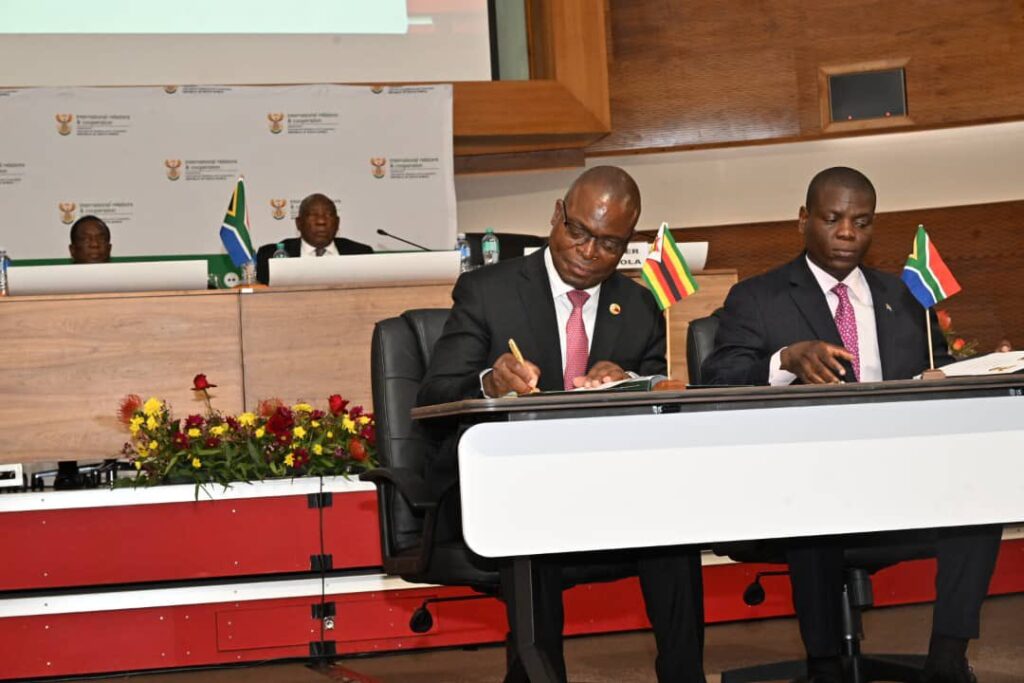
The session and accompanying Business Forum focused on strengthening economic ties, expanding trade and investment, supporting industrial development and creating opportunities for citizens on both sides of the border.
But beyond the signing of new agreements, the central message from the meeting was sharper: Africa needs partnerships that deliver results. For Zimbabwean President Emmerson Mnangagwa, the next chapter of the relationship must move beyond diplomatic commitments.
He called for Zimbabwe’s economic partnerships with South Africa and other African countries to deliver tangible outcomes for ordinary people. That means increased production, industrialisation, investment, job creation, expanded trade and improved livelihoods.
The approach places implementation at the centre of Zimbabwe’s economic cooperation agenda, while aligning with the broader objectives of regional integration, value addition and inclusive economic growth under SADC and the African Continental Free Trade Area.
For businesses and investors, the message is straightforward: partnerships must produce, investments must create jobs and economic growth must improve lives.
President Cyril Ramaphosa described Zimbabwe as an economy undergoing significant change.
“Zimbabwe is moving ahead in more ways than one,” the South African president said, pointing to the country’s modernisation, economic recovery and growing mining sector.
He cited growth of 7.25%, describing Zimbabwe’s economy as being in a period of strong recovery.
The South African president also stressed the importance of Zimbabwe to South Africa’s economic interests.
Zimbabwe, he said, remains a strategic partner and one of South Africa’s largest trading partners.
The relationship, in his view, is mutually reinforcing: when South Africa thrives, Zimbabwe benefits, and when Zimbabwe grows, South Africa benefits as well. That interdependence gives the bilateral relationship significance beyond diplomacy. It positions economic cooperation as a potential engine for wider regional growth.
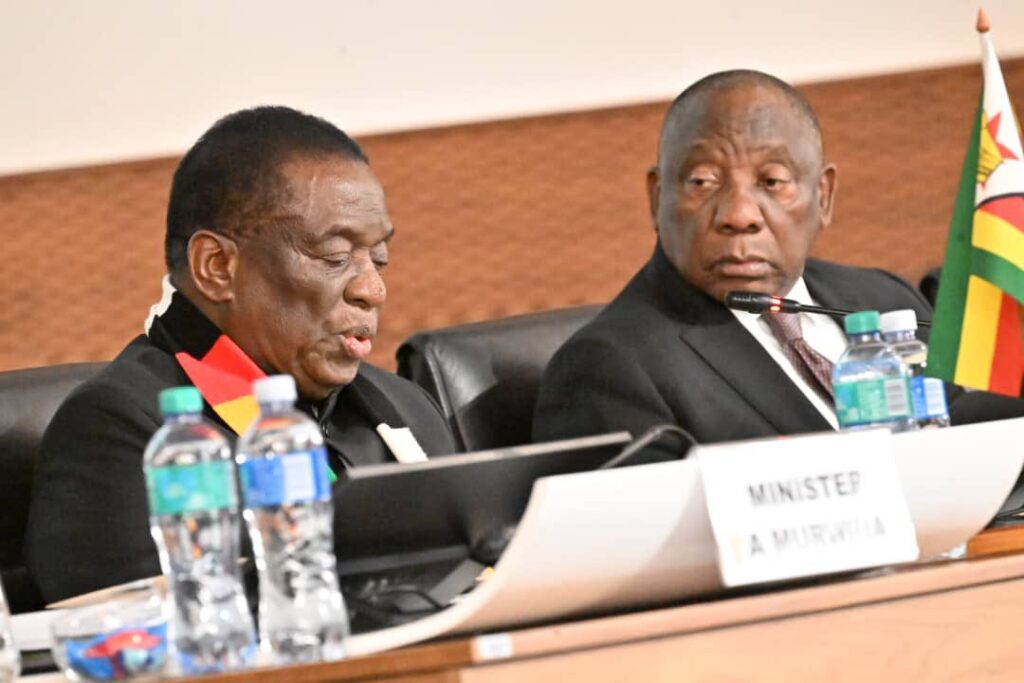
One of the strongest themes emerging from president Ramaphosa’s remarks was the need to improve the movement of people and goods across the border. He pointed to the difference in border-processing systems and highlighted the use of technology to process people, vehicles and trucks more efficiently.
For companies moving goods between South Africa and Zimbabwe, border efficiency is not simply an administrative issue. It can determine the speed, cost and reliability of regional trade.
Faster processing could support more efficient supply chains and make cross-border commerce more attractive.
It is also why infrastructure and border modernisation have become central to the two countries’ economic ambitions.
President Emmerson Mnangagwa said Zimbabwe and South Africa had agreed to reduce over-reliance on distant markets as part of efforts to build greater resilience against external shocks. Instead, the focus will shift toward high-impact projects capable of strengthening regional production.
Among the priorities identified are cross-border manufacturing value chains, infrastructure development, agriculture and mineral beneficiation. The strategy reflects a broader African economic ambition: moving from exporting resources to creating more value within the continent.
For Zimbabwe, mineral beneficiation could create opportunities to process resources locally rather than relying primarily on the export of raw materials. For South Africa, deeper manufacturing and investment links with Zimbabwe could strengthen regional supply chains and expand opportunities for businesses operating across borders.
Infrastructure will be critical to whether that ambition becomes reality. President Emmerson Mnangagwa identified the construction of the Third Limpopo Bridge and the operationalisation of the One Stop Border Post as priorities.
Both projects are intended to facilitate the seamless movement of goods, services and people between the two countries.
The emphasis reflects a broader reality facing African economies: trade agreements can open markets, but infrastructure determines how efficiently businesses can access them. If cross-border infrastructure improves alongside industrial cooperation, the South Africa-Zimbabwe corridor could become increasingly important to regional trade and investment.
President Cyril Ramaphosa highlighted Zimbabwe’s growing mining sector, while Mnangagwa placed mineral beneficiation among the strategic and transformational projects the two countries should pursue.
Processing minerals, developing manufacturing value chains and creating industries around natural resources can help African economies capture more value from their own resources. That could also create new opportunities for entrepreneurs, manufacturers, investors and technology companies supporting industrial development.
The Fourth Bi-National Commission produced new agreements and memoranda of understanding, including collaboration between Zimbabwe’s Foreign Service Institute and South Africa’s Diplomatic Academy under the Department of International Relations and Cooperation.
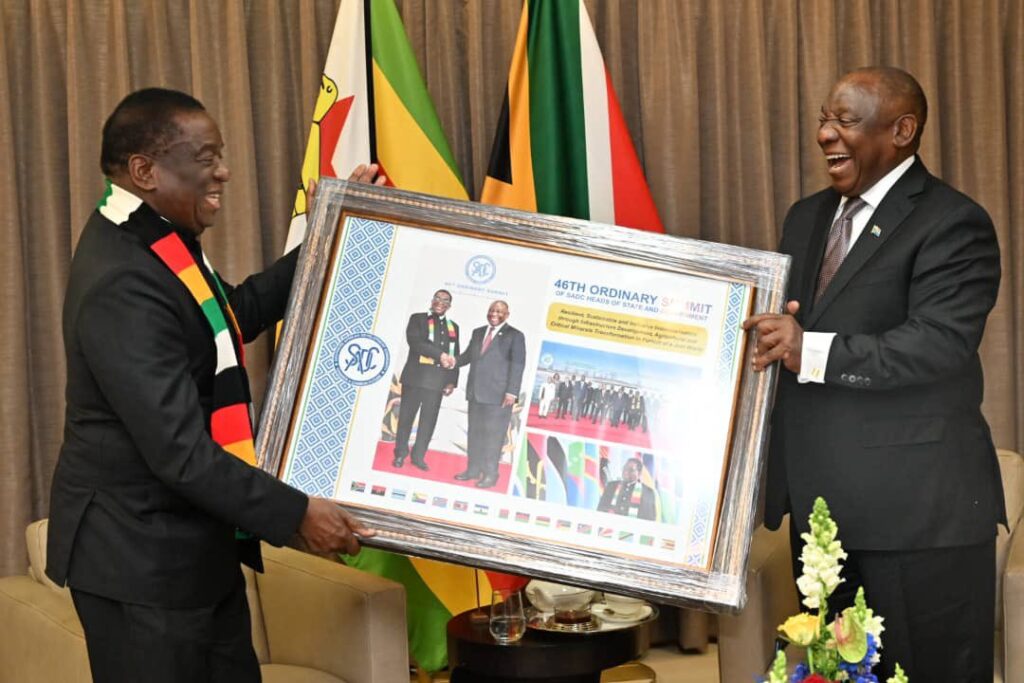
But the leaders made clear that signing documents is only the beginning. President Emmerson Mnangagwa called on officials to implement the agreements, memoranda and decisions reached with a greater sense of urgency.
President Cyril Ramaphosa delivered a similar message, saying the agreements and decisions represent concrete plans that must now be turned into action.
That implementation challenge may ultimately become the most important measure of the relationship.
The South Africa-Zimbabwe partnership reflects a much broader conversation about Africa’s economic future.
Regional markets are becoming increasingly important as African countries seek to strengthen resilience, expand intra-African trade and build productive capacity closer to home.
For entrepreneurs and investors, that creates a compelling opportunity. Cross-border manufacturing can create new supply chains. Agriculture can support processing and food production. Mining can feed beneficiation industries. Infrastructure can unlock trade. And improved border systems can make regional commerce faster and more competitive.
The Fourth South Africa-Zimbabwe Bi-National Commission therefore carries a message that extends beyond Pretoria and Harare.
Africa does not need more agreements that sit on paper. It needs agreements that become factories, investments, jobs, products and stronger regional businesses.