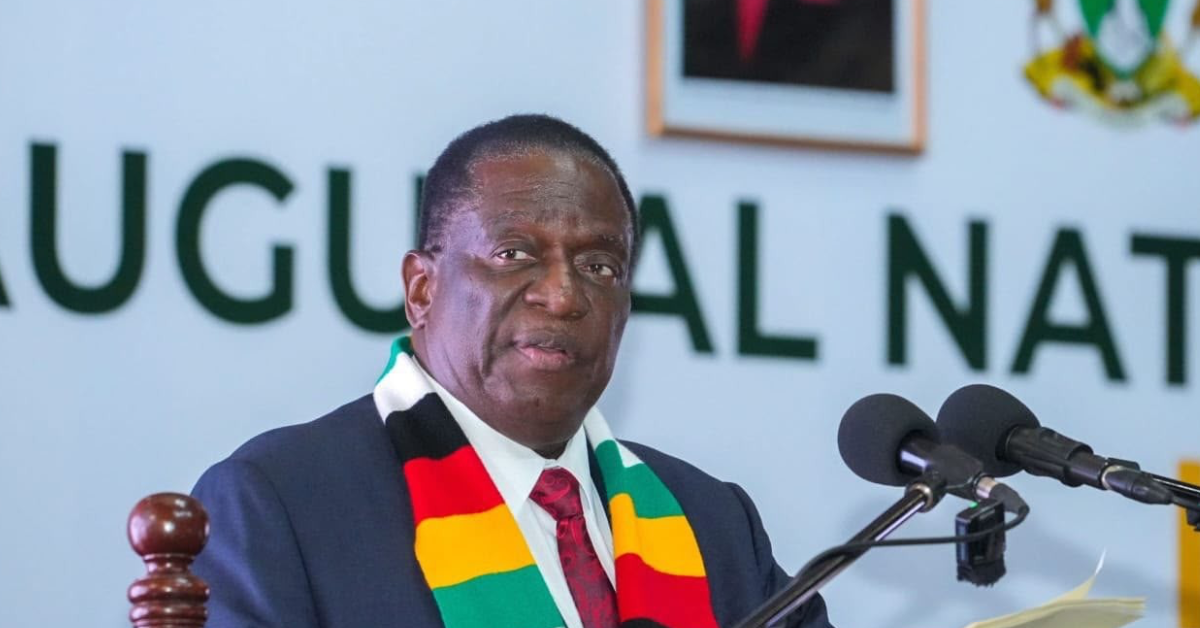
President Emmerson Mnangagwa has unveiled a stronger push for industrial transformation, urging Zimbabwe to end its dependence on exporting raw minerals and instead build a value driven economy powered by local manufacturing, technology, and innovation.
Speaking at the 2026 Zimbabwe Industrialisation Conference and Expo, the Zimbabwean leader said the country’s future prosperity depends on maximizing the value of its abundant natural resources through beneficiation and domestic processing rather than exporting them in their raw form.
He declared that Zimbabwe would no longer accept an economic model that allows its natural wealth to leave the country without creating jobs, industries, and long term economic value for its citizens.
“We would rather leave our valuable minerals underground than export them without processing them locally,” Mnangagwa said, reinforcing his administration’s commitment to industrialization and economic self reliance.
The president also emphasized that Zimbabwe is seeking partnerships based on equality rather than dependency. According to him, the era of unequal investment arrangements has come to an end as the country positions itself as a strategic industrial destination in Africa.
He described the previous investment approach as a “horse and rider” relationship and stressed that Zimbabwe now welcomes partnerships that create shared prosperity and mutual economic benefits.
Driving Value Addition Across Africa
Mnangagwa’s remarks align with a growing movement across Africa where governments are prioritizing local value addition, manufacturing, and industrial development instead of relying solely on commodity exports.
Countries rich in minerals continue to lose significant economic opportunities by exporting raw materials while importing expensive finished products.
Zimbabwe hopes to reverse that trend by encouraging investment in processing facilities, manufacturing plants, and advanced industrial technologies.
The strategy is expected to create more employment opportunities, increase export earnings, and strengthen the country’s position in regional and global supply chains.
Education Must Translate Into Production
The president also questioned why Zimbabwe continues to import approximately US$2.5 billion worth of goods every year despite decades of investment in education.
He argued that the country’s skilled workforce and entrepreneurial talent should be capable of producing many of the goods currently sourced from international markets.
“Our citizens are the primary drivers of our industrialisation agenda,” he said, calling on businesses, universities, and innovators to work together to strengthen domestic production.
The message reflects Zimbabwe’s ambition to build a more resilient economy while reducing dependence on imports.
Artificial Intelligence Gains Recognition
Mnangagwa praised local industries that are already embracing emerging technologies, particularly artificial intelligence, to improve productivity and competitiveness.
He said businesses investing in digital transformation and modern manufacturing technologies are laying the foundation for Zimbabwe’s next phase of industrial growth.
Artificial intelligence is increasingly becoming a strategic tool for African manufacturers seeking greater efficiency, improved production quality, and stronger global competitiveness.
A Call for National Unity
Concluding his address, the president urged Zimbabweans to embrace patriotism and work collectively toward achieving the country’s industrial ambitions.
He said sustainable economic transformation will require collaboration between government, businesses, academic institutions, and citizens, with a shared vision of building a prosperous and industrialized Zimbabwe.
As African economies intensify efforts to move beyond raw commodity exports, Zimbabwe’s renewed focus on beneficiation, value addition, and technology driven manufacturing could become a defining pillar of its long term economic strategy.




- Burna Boy Becomes First Nigerian Artiste to Hit 4 Billion YouTube Views

- Serena Williams’ Nike Jacket Celebrates a Legacy of US Open Dominance

- Tanzania to Host the 74th Miss World Festival in May 2027

- Beyoncé Drops Pharrell Track on 20th Anniversary Birthday

- Jay Z Stuns London With Beyoncé Tribute and Fugees Reunion