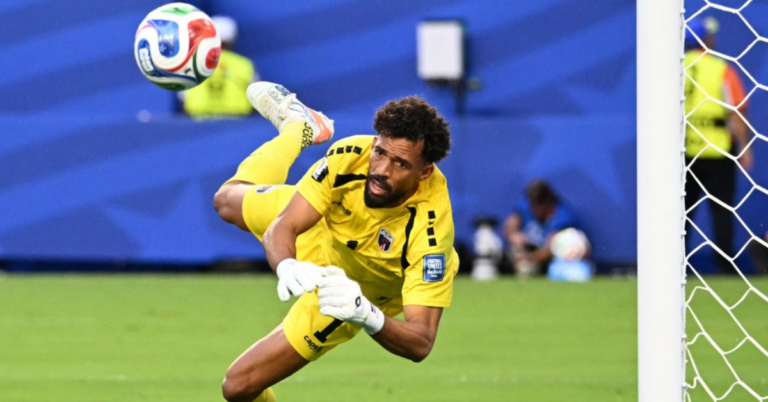
For three weeks, Cabo Verde became one of the most recognised names in global football. For a country of about 530,000 people, the exposure was extraordinary. But the significance went beyond football. It showed how sport can reshape a country’s international identity, create commercial opportunities and build national brand equity.
I work in branding and communications, so I spent this World Cup watching something beyond the football. I watched what happens when hundreds of millions of people hear a country’s name, see its athletes and encounter its identity for the first time.
Cabo Verde entered the tournament ranked 67th in the world. It drew 0 to 0 with Spain, which went on to win the tournament, before taking Argentina into extra time in the Round of 32. A supporter in Miami told Al Jazeera, “Now the whole world knows about Cabo Verde. That’s how you pronounce it, not Cape Verde.”
That is national brand equity acquired in three weeks.
But global attention is only the beginning. The more important question for African governments, sporting federations, investors and businesses is what happens after the cameras move on.
Sport has become one of Africa’s most powerful platforms for international visibility. A major tournament can introduce a country to new audiences, attract tourists, create commercial partnerships and increase interest in its athletes and businesses. But attention has a shelf life when it is not supported by infrastructure.
A successful tournament can create a moment. A functioning sporting ecosystem can create an industry.
Morocco offers one of the clearest examples. The country began a national football development plan in 2008, followed by the Mohammed VI Academy a year later. The results are now visible. Morocco sits among the world’s leading football nations, while players from its diaspora who were raised in European football systems are increasingly choosing to represent the country.
Morocco has also positioned itself as a major host for continental and international football. Its hosting of the Africa Cup of Nations reportedly generated around €1.5 billion in economic activity, a figure reported as enough to cover an estimated 80 percent of its projected costs for hosting the 2030 World Cup.
The lesson is straightforward. Morocco did not simply wait for football success to create visibility. It invested in the infrastructure capable of producing and sustaining that success.
Egypt offers another example of how sporting attention can become a wider commercial asset. Before this tournament, Egypt had never won a World Cup match. This time, it reached the Round of 16, creating fresh international interest around its emerging generation of players.
Eighteen year old striker Hamza Abdelkarim signed permanently with Barcelona in June, illustrating how global exposure can accelerate interest in young African talent. For African football, the value of a successful player extends beyond the pitch. Players can become national ambassadors, attract sponsors and increase the visibility of their clubs and academies.
But capturing that value requires systems.
Under FIFA regulations, a solidarity contribution of up to 5 percent of an international transfer fee can be distributed to clubs that trained a player between the ages of 12 and 23. Training compensation operates on a similar principle when a player signs a first professional contract and in certain international transfers involving players up to the end of the season of their 23rd birthday.
For African academies and grassroots clubs, these mechanisms can create an important financial connection between developing talent and benefiting from its future commercial value.
There is, however, a fundamental requirement. The organisation must be able to prove that it developed the player.
Registration records matter. Dates matter. Contracts matter. Documentation matters.
An academy that properly records a player’s development history may be able to claim its financial entitlement years later. An academy that fails to preserve those records may have little evidence to support its claim.
This illustrates a broader challenge across African sport. Talent is not necessarily the constraint. The infrastructure surrounding talent often is.
The challenge becomes even more pronounced in women’s football. Training compensation does not currently apply to women in the same way. FIFA approved a governing framework in December 2023, with consultation continuing.
Solidarity contributions cover both men’s and women’s football, but they depend on transfer fees. Because transfer fees in women’s football remain relatively small and less frequent than in the men’s game, less money reaches the clubs and academies developing female players through transfer related mechanisms.
Visibility therefore becomes particularly important. Sponsorship, broadcasting, partnerships, media coverage and community engagement are not simply additional benefits. For many women’s football organisations, visibility is part of the business model.
Africa does not lack talent. The continent has produced generations of exceptional footballers, rugby players, runners, basketball players and athletes across numerous disciplines. The bigger challenge is building systems that allow that talent to create sustainable economic value.
Herbert Mensah, President of Rugby Africa, has argued that Africa’s sporting potential needs stronger competitions, clearer development pathways, improved logistics and commercial models that enable sporting unions to grow. His message is particularly relevant as African sport looks towards the next decade. If the continent wants a stronger position in global sport by 2031, the foundations cannot be built at the last minute. They must be built now.
Rugby provides another useful example. Zimbabwe qualified for the Rugby World Cup last July for the first time since 1991 after defeating Namibia 30 to 28 in the Rugby Africa Cup final in Kampala. Namibia had appeared at the previous seven World Cups.
Neither achievement was created by one successful match. Both reflect years of competition, development, coaching, infrastructure and institutional commitment.
That is how sporting ecosystems are built. Not through one tournament, but through continuity.
There is another part of the equation that African sports organisations cannot afford to overlook: coverage.
Broadcast and sponsorship rights are ultimately influenced by audience size, but they are also influenced by confidence. Broadcasters want to know whether audiences will still care when the next tournament arrives. Sponsors want to know whether engagement will remain after the headlines disappear.
A federation that receives consistent coverage becomes easier for commercial partners to understand and value. An organisation that only appears in international media when it wins a major competition can be harder to position as a long term commercial asset.
That means African sport needs a communications strategy that operates between tournaments, not only during them.
The story has to continue when the stadium lights are off.
This is where communications organisations have an increasingly important role. APO Group is Rugby Africa’s Official Public Relations Partner. Its founder, Nicolas Pompigne Mognard, advises the organisation’s president and sits on the board of the World Football Summit.
APO Group also works with the NFL to expand the visibility of flag football across African markets. When the International Olympic Committee announced Senegal as the host of the first Olympic event to be held in Africa, the announcement was distributed through Africa Newsroom, a newswire owned by APO Group that reaches more than 250 Africa focused media platforms in the languages used by newsrooms across the continent.
These efforts illustrate an important point. African sport does not only need better performances. It needs better storytelling around those performances.
The global sports economy is driven by narratives as much as results. Athletes become brands. Teams become communities. Countries become destinations. Tournaments become commercial platforms.
The organisations that understand this can turn visibility into long term value.
Cabo Verde’s World Cup journey provides a compelling case study. A supporter in Miami suddenly knew how to pronounce the country’s name. That may sound like a small thing, but from a branding perspective, it is not.
A country’s name becoming familiar to hundreds of millions of people represents an increase in awareness that can influence perceptions far beyond sport. The challenge is converting awareness into familiarity, familiarity into interest and interest into economic activity.
That requires work long after the tournament ends. It requires relationships, media coverage, grassroots investment, sponsorship, tourism strategies, reliable data and strong institutions.
For African business leaders and investors, the sporting opportunity extends far beyond the pitch. A stronger sports ecosystem can support media, hospitality, tourism, technology, logistics, apparel, financial services, advertising, education and entertainment.
It can create opportunities for entrepreneurs, attract international investment, generate jobs around events and facilities, and give African companies new platforms to reach global audiences.
The opportunity is therefore not simply about exporting African talent. It is about building an environment where more of the value created by African talent can remain connected to African institutions and businesses.
African sport has already demonstrated that it can command the world’s attention. Cabo Verde proved it. Morocco demonstrated what long term investment can achieve. Egypt showed how individual talent can capture international interest. Zimbabwe and Namibia demonstrated the importance of sustained sporting development.
The next challenge is turning these moments into systems.
Attention fades. Tournaments end. Headlines move on. But infrastructure, institutions, relationships, records, brands and commercial ecosystems can continue generating value for decades.
The strategic question for African sport is no longer simply whether Africa can win the world’s attention.
It can.
The more important question is whether Africa can capture the value that comes with it.
That is where the next chapter of African sport will be written.
Libby Allen is Vice President, Brand and Creative at APO Group. Based in Cape Town, she leads marketing and creative services for the consultancy and its clients across African markets.
- Beyoncé, Tina Knowles and Kelly Rowland Open Houston Housing Project

- Taylor Swift Set to Perform at Star Studded Academy Museum Gala

- Michael Jackson’s Iconic Thriller Jacket and Moonwalk Glove Head to Auction

- Burna Boy Becomes First Nigerian Artiste to Hit 4 Billion YouTube Views

- Serena Williams’ Nike Jacket Celebrates a Legacy of US Open Dominance

From Three Weeks of Attention to Decades of Value
The Cabo Verde supporter in Miami was right.
For three weeks, the world knew the country’s name and knew how its people wanted it pronounced.
That is valuable.
But lasting national brand equity requires more than a memorable tournament.
It requires relationships built over time.
It requires stories that continue after the cameras leave.
It requires grassroots investment, reliable reporting, community engagement, commercial partnerships and strong institutions.
For African sport, the opportunity is therefore much bigger than winning matches.
The real opportunity is to turn visibility into infrastructure, infrastructure into commercial value and commercial value into sustainable development.
The next time the world comes looking, Africa should already have the systems, stories and relationships in place to capture the value.
- Nicola Peltz Beckham’s Beverly Hills Home Goes Minimal

- How Neesa Atelier is Weaving Ghanaian and Malian Influences Into Contemporary Luxury Fashion with “Dust & Raffia” Capsule Collection

- AMVCA 2026 Fashion Takes Over the Internet as African Designers and Celebrities Deliver Stunning Masterpieces

- Nana Akua Addo Breaks Internet With Architectural AMVCA 2026 Dress