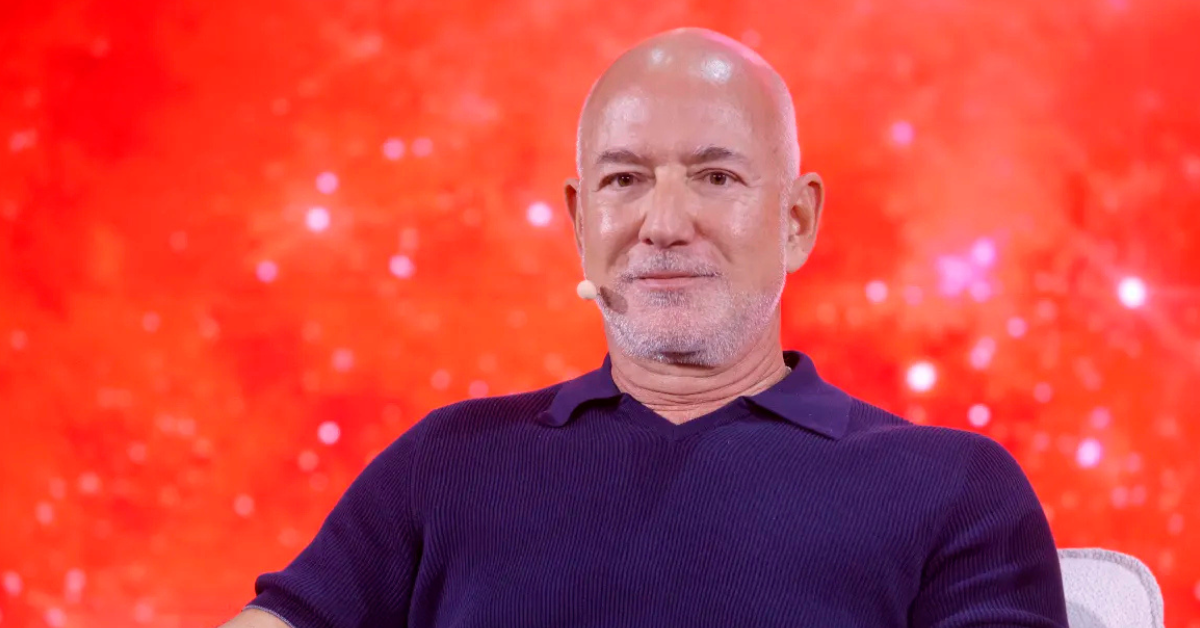
A consortium that includes Amazon founder Jeff Bezos has agreed to acquire a minority stake in Liverpool Football Club, marking the billionaire’s first investment in a professional sports franchise.
Fenway Sports Group, Liverpool’s ownership group, confirmed the deal on Friday. The investment consortium, known as 1892 Holdings, is set to acquire roughly one third of the Premier League club.
People familiar with the transaction said the minority investment values Liverpool at about $7.1 billion. The agreement also gives the consortium an option to become the club’s majority shareholder within the next 12 months at a valuation of around $8 billion.
The deal represents a major expansion of Bezos’ investment interests into global sports. The Amazon founder is the lead investor in K5 Global, which is providing more than $1 billion of the consortium’s investment.
Bezos Brings Technology and Investment Capital to Liverpool
The consortium is managed by businessman Amit Bhatia, who serves as its primary partner. Bhatia is a former co owner of Queens Park Rangers and brings extensive experience in football ownership and investment.
The group also includes K5 Sports and EE Capital, the family office of Elaine and Eduardo Saverin. Saverin is a co founder of Facebook.
Bhatia will become Liverpool’s vice chairman and join the club’s expanded board, according to people familiar with the transaction.
Bezos will not take a board seat. Bryan Baum of K5 Sports and Elaine Saverin will also join Liverpool’s expanded board.
The investment group declined to comment on the transaction.
Liverpool said the new minority owners would support the club’s long term ambitions by combining expertise across global business, technology and investment.
“Liverpool has always been built by thinking beyond one season and making decisions with the club’s long term interests in mind,” FSG President Mike Gordon said in a statement.
Gordon added that the consortium shared FSG’s long term philosophy and appreciation for what makes Liverpool distinctive.
Liverpool’s Growing Value Draws Global Investors
The transaction highlights the increasing financial appeal of elite European football to some of the world’s wealthiest investors.
Liverpool has become one of the most valuable football clubs globally, supported by its commercial strength, international fan base, broadcast revenues and competitive record.
CNBC’s 2026 Official Global Soccer Team Valuations ranked Liverpool as the fourth most valuable football club in the world, placing its value at approximately $6 billion.
The new transaction places an even higher valuation on the club, reflecting investor expectations around Liverpool’s future commercial and sporting potential.
For Bezos, the investment provides an entry point into one of the world’s most commercially powerful sports markets while giving him exposure to a club with a global audience.
The billionaire, whose fortune was built through Amazon, has an estimated net worth of $272 billion, according to Forbes.
He has previously explored potential investments in American sports, including ownership opportunities involving the NFL’s Washington Commanders and Seattle Seahawks.
Option to Take Control Could Reshape Liverpool Ownership
The most significant element of the transaction may be the consortium’s option to become Liverpool’s majority owner.
If exercised within the next 12 months, the option would value the club at approximately $8 billion. That would represent a substantial increase from the valuation attached to the current minority transaction.
The structure gives Bezos and his investment partners a pathway to greater control without requiring them to commit immediately to a full takeover.
For Liverpool, the arrangement brings additional capital and access to a network of investors with experience in technology, finance, entrepreneurship and global business.
Liverpool competes in England’s Premier League and has won 20 league titles. Its most recent championship came in 2025.
The deal therefore arrives as the club enters another period of commercial expansion, with international investors increasingly viewing elite football clubs as global entertainment and business assets rather than traditional sports properties.
For African business leaders and investors watching the global sports economy, the transaction also illustrates how technology wealth, private capital and sports ownership are increasingly converging.
Bezos’ potential path from minority investor to controlling owner could ultimately make Liverpool one of the most closely watched examples of this new investment model.


- Beyoncé, Tina Knowles and Kelly Rowland Open Houston Housing Project

- Taylor Swift Set to Perform at Star Studded Academy Museum Gala

- Michael Jackson’s Iconic Thriller Jacket and Moonwalk Glove Head to Auction
- Burna Boy Becomes First Nigerian Artiste to Hit 4 Billion YouTube Views

- Serena Williams’ Nike Jacket Celebrates a Legacy of US Open Dominance